Understanding Rifle Scope Holdovers: Ensuring Match with Reticle Subtensions
When a shot misses the target at a known distance many shooters first think the zero of their rifle is wrong. The real cause may be the subtensions of the reticle. These marks can be set for magnifications, ammunition or shooting conditions that do not match what the shooter uses now. Checking holdovers turns the reticle from an aid into a precise measuring tool. Often it is easier to adjust elevation by an inches than to trust holdovers that may be wrong.
Assessing Reticle Marks: The Importance of Measurement
Beginning with an understanding of the reticle subtensions is more important than judging the reticle by looks. Every reticle mark shows a distance. Manufacturers may give that distance in minutes of angle (MOA) or milliradians (mRAD). What matters to shooters is how these numbers become distances when the reticle is set to a magnification.
Start by reading the scope manual and writing down the magnification levels that match each reticle subtension. Do not assume that a reticle with a tree pattern or hash marks will give holdovers at every power level. For example thin lines may disappear in trees while bold posts can hide aiming points on long ranges. A diagram usually shows what each mark should mean. That diagram does not promise that the marks will work well in life with your particular rifle, ammunition, shooting style and eye position.
Distinguishing Zero Confirmation from Holdover Evaluation
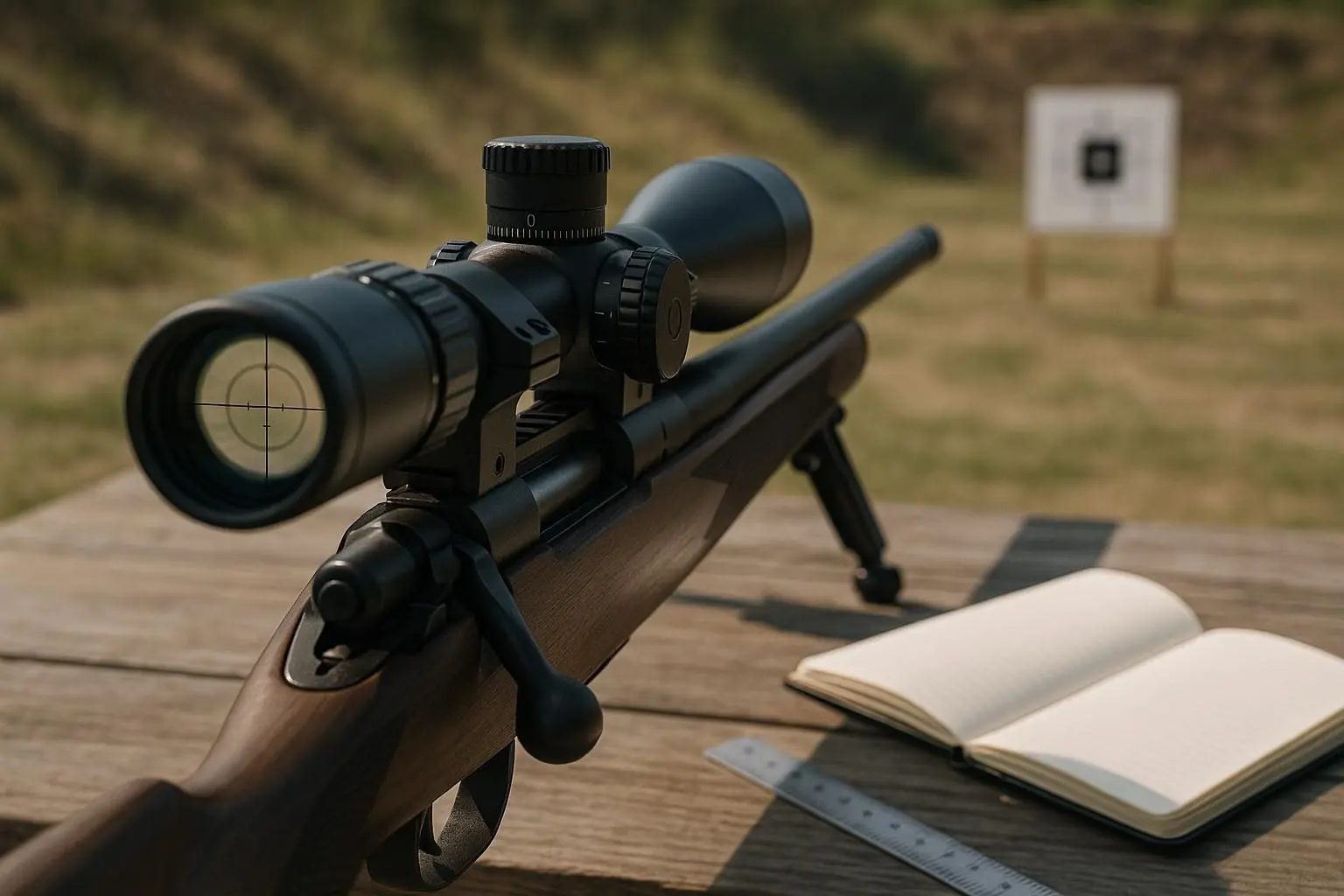
To check holdovers with accuracy begin with a shooting arrangement. Use a target that shows the point of aim and the impact clearly. Follow range rules keep the firearm pointed safely and make sure the area around is secure before starting any tests.
First verify the rifle zero with the central reticle mark and the ammo you plan to use. If the shot group moves from the target. Spreads unevenly stop the test. Trying to read secondary reticle marks before a firm primary zero can cause confusion.
When the zero is start shooting groups at reticle marks. Fire enough rounds to see a pattern but pause if weather or other conditions change sharply. Record the magnification, the distance, the type and any weather that could affect the shot.
The goal is not to make every mark perfect. Instead find which reticle references work reliably for your situation and tell the difference between marks and exact marks.
Magnification Matters: Avoid Faulty Blame
Shooting people sometimes miss a point when testing scopes: using a focal plane (SFP) reticle at a power level that is not the one the maker says. With a plane scope the reticle does not change size so the angle between reticle marks and the target changes when you change power. Therefore a holdover mark that is good at one power may not be good at another.
To avoid that mistake write down a power level on the data card. Put a small note if allowed. You do not always need the magnification. Pick a power that shows a sight picture and enough field of view for your shooting situation.
An opposite choice is a plane (FFP) reticle. The FFP reticle keeps the angles at all powers. The reticle gets bigger or smaller when you zoom holdover calculations are easier. The fine details can fade at powers. Choosing an FFP reticle brings a trade‑off between how you can see and how consistent the angles stay.
Evaluating Under Conditions
A bench test can hide problems that show up when you shoot from positions or when your eye does not line up with the lens. After the grouping test the holdover marks, from field positions that look like your normal shooting stance. Make sure those positions are safe and allowed at the range.
I make sure to keep support for my rifle and watch for errors especially at greater distances or if my head position shifts. Lighting can also impact visibility; the reticle may stand out well against the white of a target. Could fade into the background when aimed at shaded areas or bright skies. While illuminated reticles can enhance visibility they cannot fix subtension discrepancies. I always evaluate if the reticle remains clear without hiding target details.
I also remember not to adjust the elevation turret between tests. These evaluations should clarify how each reticle mark affects impact to my zero. Changing settings mid‑test can give results.
Maintaining a Comprehensive Record
I find that making a shooting record is a reference instead of relying on memory alone. My documentation should focus on variables that will influence my decision‑making: the distance to the target the magnification used the reticle mark applied, the observed impact and any factors that affect visibility or rifle stability.
After every range session I consult this checklist:
– Confirm that the center aiming point is verified with my chosen ammunition.
– Note the magnification for every plane holdover test.
– Understand how the reticle behaves in focal plane settings at chosen powers.
– Ensure secondary marks underwent testing of being inferred through diagrams.
– Verify groups from realistic field positions.
– Account for parallax and eye‑position issues.
– Discard any unclear or inconsistent marks from my working data.
A streamlined set of verified references will be far easier to interpret than a chart filled with uncertain data points.
Adapting Methods Based on Situation
I find that using holdovers can be very useful in changing environments when I have time to make turret adjustments. However effective holdovers depend on range estimations and a disciplined memory of which mark corresponds to which condition. In contrast turret adjustments can give precision if I have time to assess the range and calibrate accordingly. They do carry the risk of dialing in the direction. Forgetting to return to the original zero.
Ultimately the decision on which method to use should depend on how I intend to use my rifle the visibility of the reticle the distances involved and my ability to process information under pressure. If my field tests show that only the central point offers clarity and repeatability I should embrace that information than force a strategy that might cause confusion.
I stay vigilant about rechecking my references whenever I change my ammunition alter the mounting setup, service the optic or notice a shift, in zero. Holdover validation is not a one‑time task; it needs checks to make sure that the reticle marks stay relevant to my gear and the conditions I face in the field.